The idea of what is right comes up often in conversation with Ryosuke Tomita. As a creative director at Patmos, he examines the conditions of each project, one by one, in search of a form suited to its context. Before following an impulse or a preference, he keeps asking why something should be the way it is. This is one of the attitudes that sustains his practice. Yet the things in which Tomita finds beauty are not necessarily made with human intention. Things that simply exist. Things that pass out of human hands, change through time and their surroundings, and gradually weather away. There is a beauty in them that cannot be fully accounted for by a maker’s intentions or plans.
The effort to make things rightly, and a beauty that remains beyond the reach of that effort. The act of intending, and what emerges beyond intention. Tomita’s way of seeing lies somewhere between the two. Through his practice, this conversation in Epilogue follows a question: where do rightness and beauty meet?
Animals and Intentionality
—A Conversation Grounded in Beauty
P: You travel in Japan and abroad, and spend your weekends on pottery, dyeing, hiking, and music, among other cultural activities. Drawing on those experiences, could you tell us what evokes a strong sense of beauty or sensibility for you?
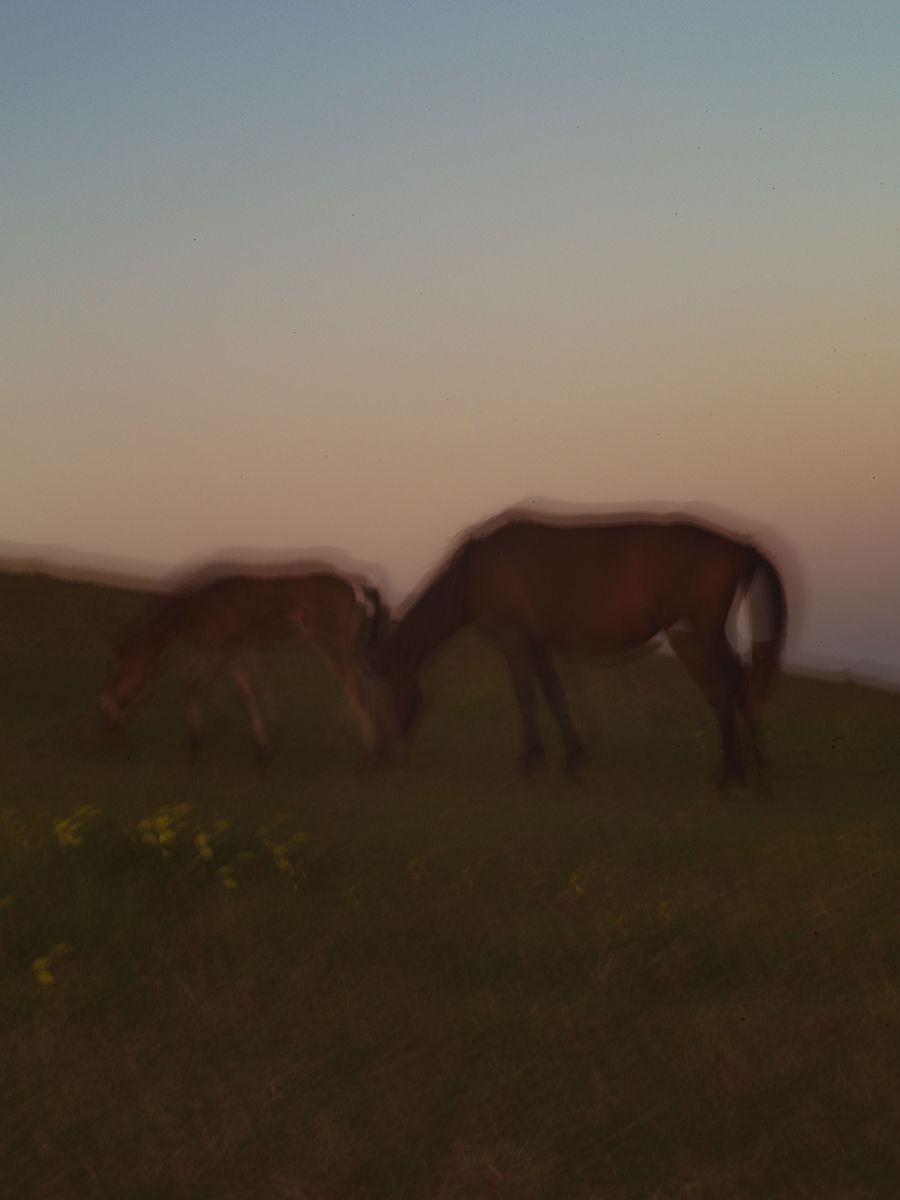
Tomita: Animals come to mind first. The extraordinary way beauty resides in them simply because they are alive. I am not sure beauty is even the right word, but there is no contrivance in any of their actions. I feel something profoundly good in the way they simply do something because they want to. I imagine that if I could see spirits, they would be beautiful in much the same way. Perhaps neither spirits nor animals really belongs to the human world.
P: I imagine that both animals and spirits act of their own accord and simply manifest themselves.
Tomita: Perhaps that really is all they do: manifest themselves. Humans seem like the opposite to me. I am not actually that interested in humans as a species. There is more to us than simply manifesting. We are not pure; there always seems to be an intention. We indulge in excessive luxury, destroy nature, and make one another miserable. Sometimes I think, wouldn't it be better if all humans disappeared? But at other times I wonder whether our existence does make some contribution.
P: What you say suggests a very critical eye toward human selfishness and contrivance.
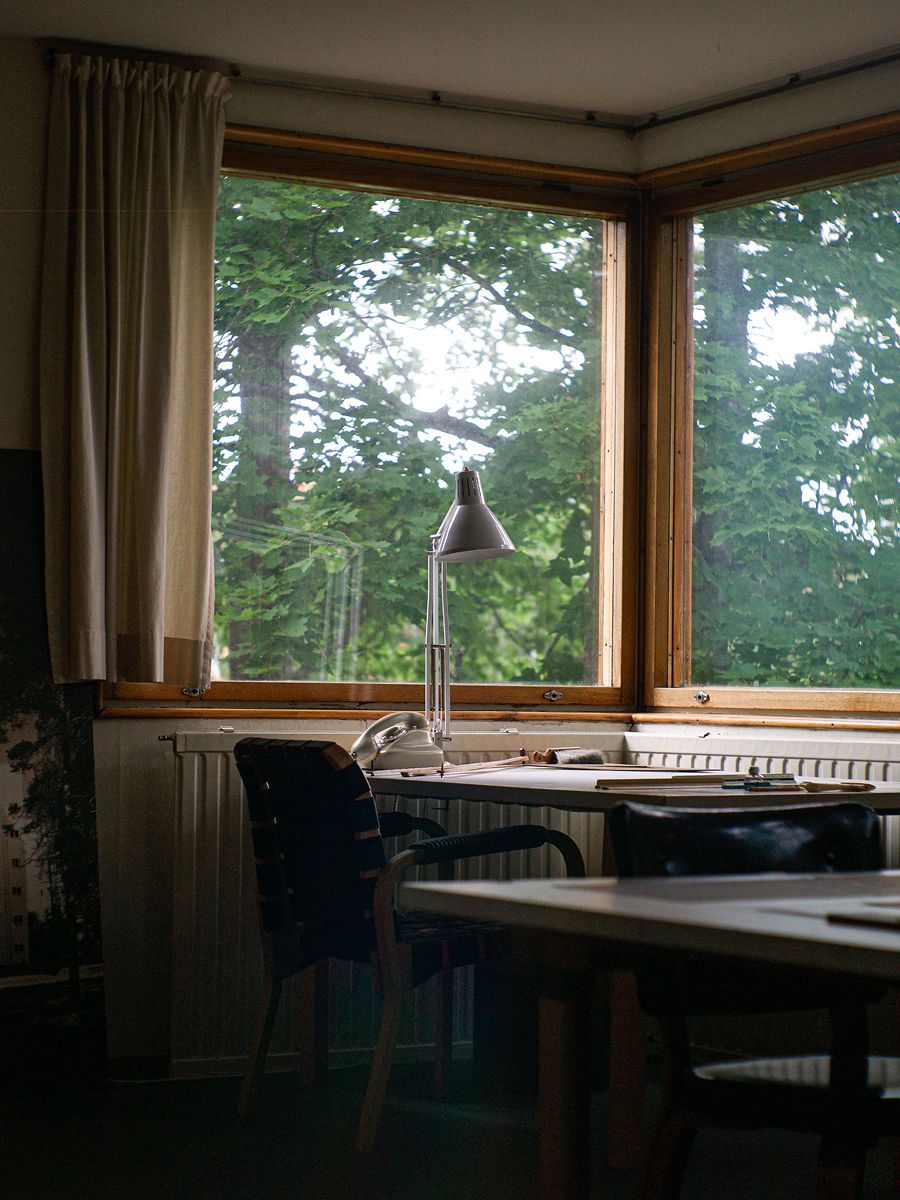
Tomita: Yes. I recently visited the Aalto House, which Aalto designed for himself. I do not think I would have found it good when it was first completed. But I felt a strong aesthetic presence in its present state, fifty years after his death and after the building had ceased to be used: walls overgrown with plants, soft light through the windows, furniture whose fittings had loosened. Its forms were originally made by people and changed over time through human involvement. Yet I think what moved me so much was the time that then passed without people, allowing them to weather. It is difficult to explain, though, because I would not have been so moved without the traces of human involvement. It is not simply a celebration of aging.
P: That is interesting.
Tomita: Perhaps some recent architecture and products leave me cold because the maker's intention is too clear. I can sense the staging: this is how I want you to see it. Ultimately, what I find most interesting and beautiful is the purity of someone making something simply because they could not help wanting to make it. Perhaps beauty does not reside as readily as we think in objects that have been thoroughly reasoned out.
P: Your everyday work might be described as Western-style design supported by logic. That seems to create a paradox between what you make and what you find beautiful.
Tomita: Yes. I make fairly orderly things, but I see them as a kind of constructed beauty. In other words, perhaps they do not contain beauty in the truest sense. I think it is impossible to reach what I genuinely experience as beauty as long as I possess that specifically human intentionality.
P: Perhaps working with that dilemma opens up a particular understanding of design.
Tomita: Sometimes I wonder whether philosophizing about beauty has actually impoverished human sensibility by giving names to the things we find beautiful. Perhaps putting beauty into words has replaced the expression of our original wonder and joy.
P: If humans had never been taught about beauty, and language had not developed as far as it has, how do you think they would have expressed it?
Tomita: If they found a beautiful, shining stone, perhaps they would first pick it up and look at it. Then they might cry, sit around it in a big circle, or dance furiously. Once that ritual—if you could call it that—was over, they might try to make something similar and discover that they could not. Perhaps that inability would make them marvel at it as something beyond human understanding, something not of humans. I don't know, though. [Laughs.]
P: Perhaps naming things has caused us to stop thinking through many of our bodily sensations.
Tomita: Exactly. I use words a great deal in my work, and humans developed language out of necessity, so perhaps there was no escaping this problem. Even so, I feel that what matters most is expressing beauty as it exists before learning or education, rather than putting it into words. What we think of as beauty has been installed in us through education. The moment we name or define it, perhaps its actual presence slips out of focus.
P: Although your role requires you to use words with care, are you strongly drawn to forms of communication at the opposite end of the spectrum?
Tomita: Absolutely. I think quite a few problems arise simply because language exists. Excessive conformity in the name of empathy is one of them, and there is always something like a lie in words. Showing something through your attitude is much simpler. Sometimes I imagine what might have happened if, for example, our ability to sense expressions and emotions had developed instead.
The Will to Seek What Is Right, and the Openness to Let It Go
—A Conversation Grounded in Truth and Goodness
P: Earlier you mentioned your limited interest in humans as a species. Yet you are interested in why an individual arrives at a particular way of thinking. That seems revealing.
Tomita: There are things in the world that are ordinary to others but that I cannot interpret, cannot understand, or have never even considered. There are areas my usual way of seeing simply cannot perceive. Honestly, even when we explore a client's archetype at Patmos, I often struggle to keep up with what I am being shown. But unless I understand what is good about the tastes and objects they mention, I cannot accurately bring their aesthetic sensibility to light. As I investigate, though, I gradually begin to see the appeal of things I could not understand. Sometimes they become part of my own database of good things. There is something fascinating about the process by which the unknown becomes known.
P: As a particular species and individual, understanding the world correctly in any literal sense is almost impossible. Even so, do you feel a strong urge to find connections between what you know and what you do not, or to bring order to the chaos they form?
Tomita: Yes. It is demanding and quite tedious, so I honestly do not know whether I would do it out of personal interest alone. But when work requires it, I get absorbed. Before I know it, I want to investigate something deeply. It feels very worthwhile to arrive at an answer that not just I, but anyone looking at it, can find convincing.
P: Seeking answers grounded in objectivity and facts rather than subjectivity sounds almost like the approach of a natural scientist.
Tomita: Put simply, perhaps I am just not good at letting subjectivity lead. Creative professions such as design tend to be seen as inventing things that did not previously exist, but that is something I struggle with. Completely original works are probably difficult to produce these days, but even allowing for that, originality is a high hurdle for me. Artists and painters who enjoy engaging with their work seem more capable of producing originality—of creating something you cannot quite make sense of. I have to work very hard to reach that state. I almost have to force myself under pressure and switch to a different part of my brain before I can finally squeeze something out.
P: Your usual approach does seem to involve carefully building a logical path from the given conditions and assumptions toward an answer that feels inevitable. Logic comes first, rather than inspiration.
Tomita: Yes. My basic stance is to find the right answer, or to prioritize what is right for that brand, project, or place. So I do not usually suggest anything outlandish, and it is difficult for me to naturally choose an approach that does not prioritize rightness. Putting something else first goes against my nature. It feels uncomfortable and somehow false.
P: Is that part of your temperament beyond work as well?
Tomita: My job does put me in a position where people will tell me when something is not right, but I think I have always had a strong tendency to seek what is right.
P: In our preliminary conversation, you said that if rightness and enjoyment stood in opposition, you would tend to seek rightness, and that you seem to prioritize it over enjoyment when making decisions.
Tomita: I do not really understand what joy is for me, or what it feels like to enjoy something without reservation. I am aware of that about myself. I do not really watch comedy, for example. I do sometimes find it impressive or funny, but still. The same goes for the pottery I do as a hobby. Sometimes I suddenly wonder whether I am actually doing it because I enjoy it. The moment something turns out as I intended is fascinating, but everything leading up to that is not enjoyable at all, in a way. I wonder what everyone else feels. Perhaps they do not think about it.
P: Some people enjoy the process itself more than the pleasure of completion.
Tomita: Yes. There are moments I find interesting along the way, but if the result does not match my ideal, I end up feeling that none of it was enjoyable, whatever the process was like. I feel it was not enjoyable from beginning to end.
P: Do you strongly want the things you are involved in to be exact and finely resolved?
Tomita: Perhaps that is the kind of rightness I carry within me. If reaching it is my overriding aim, perhaps I do not seek enjoyment in the process. Although I do recognize that I gradually begin to feel joy as completion comes into view. When that happens at work, I can feel it was a good job. Perhaps it is simply a kind of pleasure, but there are not that many things in life that leave you satisfied, are there? Music, cooking, everyday life—perhaps in every situation I am trying to find out what I enjoy. I sound rather like a robot, don't I?
P: Listening to you, I sense that you regard nothing as absolute, including your own emotions.
Tomita: I am not fundamentally very positive. I do not know whether my brain was born particularly alert to risk or developed that way. But if you keep thinking something through, most things do not seem entirely positive. Perhaps you can be optimistic if you stop thinking at a certain point. In that sense, I am probably very cautious.
P: Do you want to work out as many possibilities as you can and prepare for them, practically and mentally?
Tomita: Yes. Going somewhere completely unfamiliar can be quite tiring. I rarely feel afterward that preparation was unnecessary. I think what matters is being able to feel at ease without a sense of danger. But that does not mean I am entirely content with predictable outcomes. I can accept a kind of chaos that arises after I have worked to the point where I feel I have done enough. What I find hard to accept is confusion caused by my own failure to think things through sufficiently.
P: You can accept external factors, but are strongly self-reflective about things your own actions or judgment could have improved.
Tomita: I suppose so. There are external factors you simply cannot do anything about, which makes them easier to let go of. When I realize something is beyond my reach, I try to give it up, just like that. It can be difficult to draw that line quickly after putting in so much work and care. But once I see that continuing to try has no meaning, I can decide to stop.
P: Could the place and environment in which you grew up have influenced this? You grew up somewhere that valued the qualities associated with the traditional Kyushu man. But I understand that your own natural disposition did not allow you to simply accept that spirit.
Tomita: I resisted those local traits: being imposing but not arrogant; being taught that men should be strong and robust, while also being loyal, considerate, and conscientious; maintaining strict hierarchies yet never forgetting gratitude toward one another. I understood intellectually that there were good aspects as well as bad ones, but my resistance was stronger. Before becoming conscious of those local expectations, I had been in a free, reassuring environment where no one forced things on me. Perhaps the contrast frustrated me. Asking people around me not to behave that way would not change anything. By high school, I had partly given up on that environment and decided that I should not be there. I made up my mind to leave as soon as I could.
P: That seems to reveal something of your character. Throughout this conversation, I have sensed an effort to see opposing elements, such as positive and negative aspects, and an acceptance of what cannot be changed.
Tomita: Perhaps that is my essence: consciously trying to look at opposing things. As I learn about something and understand it better, I can also switch quite quickly to the opposite view. Sometimes I think that is uncool, but I immediately try to restore a balance.
P: You describe yourself as not straightforward or receptive, but sometimes I think you may be more open than anyone.
Tomita: Do you think so? Hmm. Some people cling to the correctness of their own perspective or impose it on others, and I wonder about that. I think you can see someone's character in how they respond when their own perception diverges from someone else's. When opinions differ, some reject the other person, while others try to correct themselves. I used to challenge people whose opinions differed from mine, but perhaps because my rebelliousness has softened, I am moving toward the latter.
P: Perhaps that is a process of self-discipline in pursuit of a rightness closer to truth.
Tomita: Honestly, I have never really found anyone to use as a benchmark. I feel I have to go my own way, but there is one cultural anthropologist whose work resonates with me.
P: We will leave the name out here, but this scholar studies topics such as reincarnation and memories of past lives.
Tomita: The research itself impressed me, of course, but to me this person seems to move between rightness and enjoyment. I do not know how they see themselves, and this is all based on the hypothetical idea that rightness and enjoyment are opposites. Still, their research style and way of thinking made me feel that my own ideas, which had struggled to find a place, were being affirmed.
P: I see.
Tomita: They organize and discuss facts based on earlier research, but do not end by declaring an academically definitive verdict. To borrow their expression, they let emotion spill all over the place. Academia normally seems to expect some kind of causal account, but they depart from that pattern. And they say this structure is a good thing. This next part is my interpretation: if humans live with both reason and sensibility, making full use of them means engaging properly with both poles, and allowing individual readers to choose from within that range. I feel they somehow taught me that you can pursue what is right and still find enjoyment.
P: Just out of curiosity, if you were reincarnated, would you want to be human again, or an animal?
Tomita: An animal. Perhaps it is because I am human now, but a hundred years feels a little long to live. A bird, for example, might finish its life in around twenty years and move on to the next. It may sound irreverent, but that sort of span appeals to me.
P: Is a human life too long?
Tomita: With a hundred years, you make all sorts of rational judgments and hesitate over all sorts of things. When you think you can do this and that, desires multiply. In that sense, I live in a very human way myself. But if life were shorter, I think I would just rush through it: this is fun, so this is all I will do, without thinking about all the practicalities of living.
P: Rush through it! [Laughs.] Yes, perhaps you would live more spontaneously.
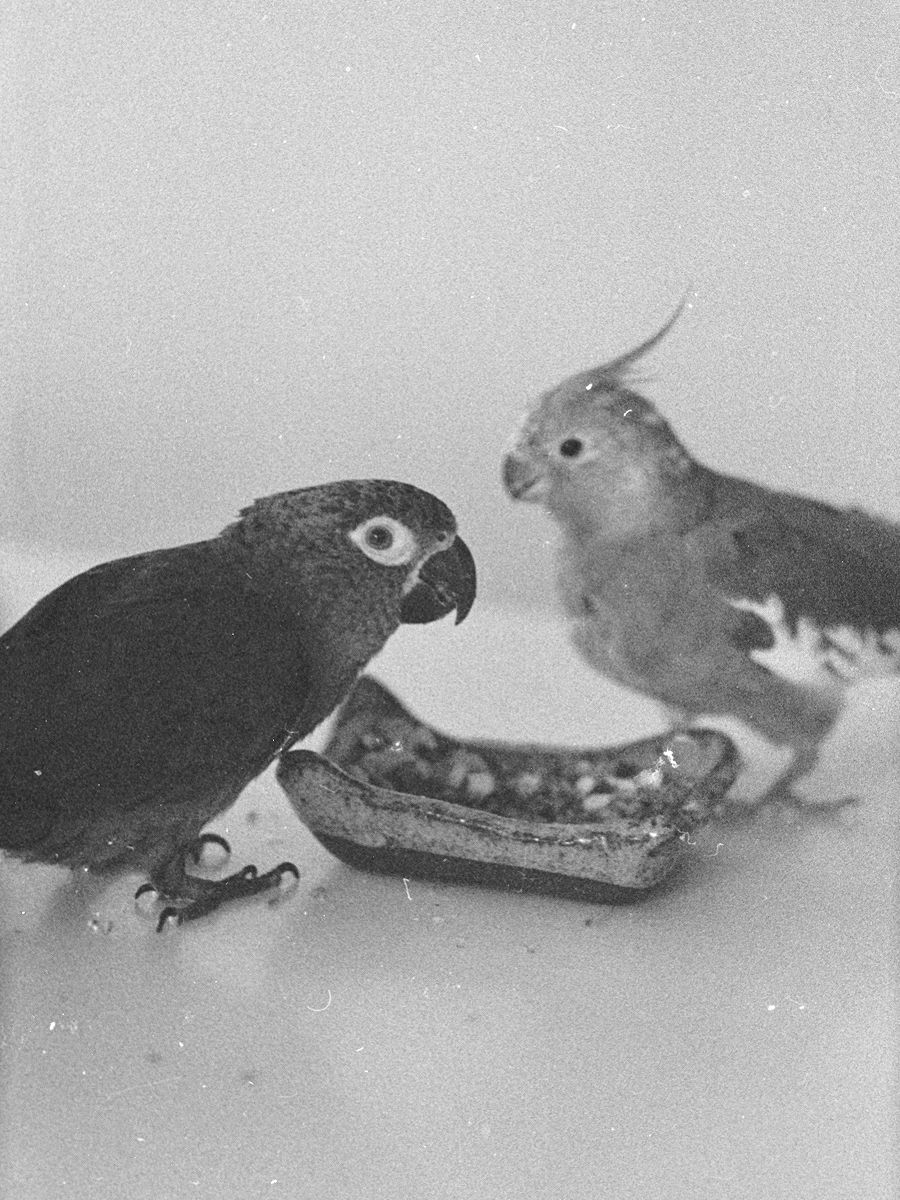
Tomita: Exactly. Perhaps I would not even need rightness anymore. Looking at the parakeet we keep at home, her life is so simple: as long as she has her person and her food, she is fine. If that is happiness for her, I think it is the best possible way to live.
Manifesting, and Continuing to Manifest
—A Conversation Grounded in Gestalting
P: What comes to mind when you think of a thing or object continuing to exist?
Tomita: I cannot really imagine continuing to exist in the first place. Existence is so ambiguous. If something will cease to exist one second from now, can we definitively say that it exists now? Calling it something that is manifesting feels more natural than saying it exists. A thing or event does not continue to exist; its manifestation continues. What that brings to mind is the state of remembering when it was manifesting. If a phenomenon is something that can be perceived by someone, can we call something existence if it remains in some form of memory after it is no longer perceived? That raises another question.
P: Perhaps a phenomenon is established through a relationship with an observer who perceives it.
Tomita: Whether a concept or something else, whatever persists into later generations might be understood as something intentionally retained after being judged meaningful to humans, or something that happened to remain as an individual's memory or record. At the opposite pole are nature and all the things humans can do nothing about. Those feel real to me in that way, rather than conceptual.
P: What if we make a person the subject, beginning with you, Ryosuke Tomita? What kind of phenomenon is it for a person to go on living?
Tomita: Perhaps it is the accumulation of memories and records in the body. In the central plot of Macross: Do You Remember Love? (1984), a race of giants raised apart from culture and emotion encounters a song from the age of its distant ancestors, awakening feelings and cultural capacities that seemed lost. In a similar way, seeing a single picture can awaken sensory experiences from before and after it, or memories that seem unrelated. We might even feel we know something at a genetic level. I understand that phenomenon as what it means to go on living.
-
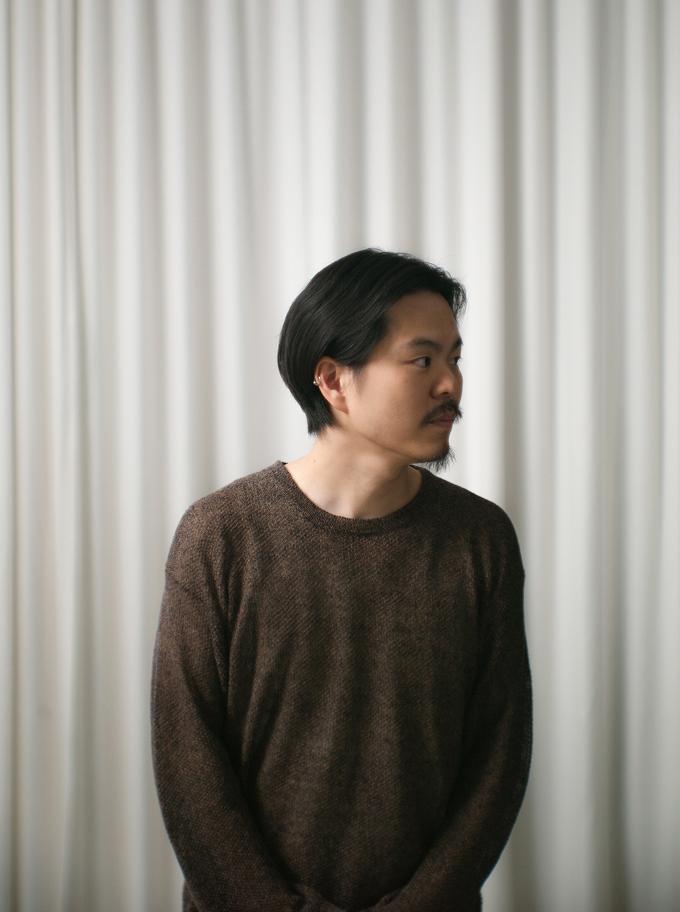
Creative Director, Art Director, and Designer. After studying cultural anthropology at university, he joined B&H (now Patmos) in 2014. With branding at the core of his practice, he works across disciplines including graphic design, digital, film, music, and spatial design. Drawing on an anthropological perspective, he explores and interprets each client’s aesthetic values and cultural context, translating them into brands that remain relevant over time while reflecting the spirit of the present. Through design, he seeks to shape meaningful communication between clients and society. His work has received international recognition from Awwwards, FWA, Good Design Award, Red Dot Design Award, and iF Design Award, among others.