Rintaro Hori loves making things, and is good at it. Yet the work he chose was not centred on giving form to things himself. His grandfather’s carpentry workshop, a childhood spent folding origami, and metalwork studied at art university: these experiences led him to his current role as a director at Patmos, working alongside those who make. For Hori, making is a way of becoming absorbed in something on his own, away from anyone else’s judgement. In a gathering, however, he cannot help noticing when someone is not enjoying themselves. How do the purity he seeks in making alone and his attentiveness to other people come together within him?
Hori says he has taken on work that does not come easily to him, and that every project still leaves him bruised. Even so, he wants to be part of a team that enables people to make things with a sense of purity. Someone who cares deeply about making has chosen to stand beside those who make. As we traced the reasons for that choice, we were reminded that working with one’s hands is not the only way to be involved in making.
A Perceptual World Bounded by the Vessel of the Self
—A Conversation Grounded in Truth and Goodness
P: Is there something you find yourself drawn to, or a question you keep returning to? It could be concrete or abstract.
Hori: Something I find myself drawn to… What would that be? Perhaps wondering how something is made.
P: An interest in how things come into being?
Hori: Yes. That applies to material things, but also to timelines and ways of thinking. In everyday life, I sometimes look at what people on the train are wearing and invent a persona for them. Why did they end up choosing these clothes? Does that mean they might have lived this kind of life?
P: You imagine someone's past and think about how it connects to their present.
Hori: Exactly. And it is not just people; the same goes for brands and products. I also wonder why each of the things we broadly call tools came to take its particular shape.
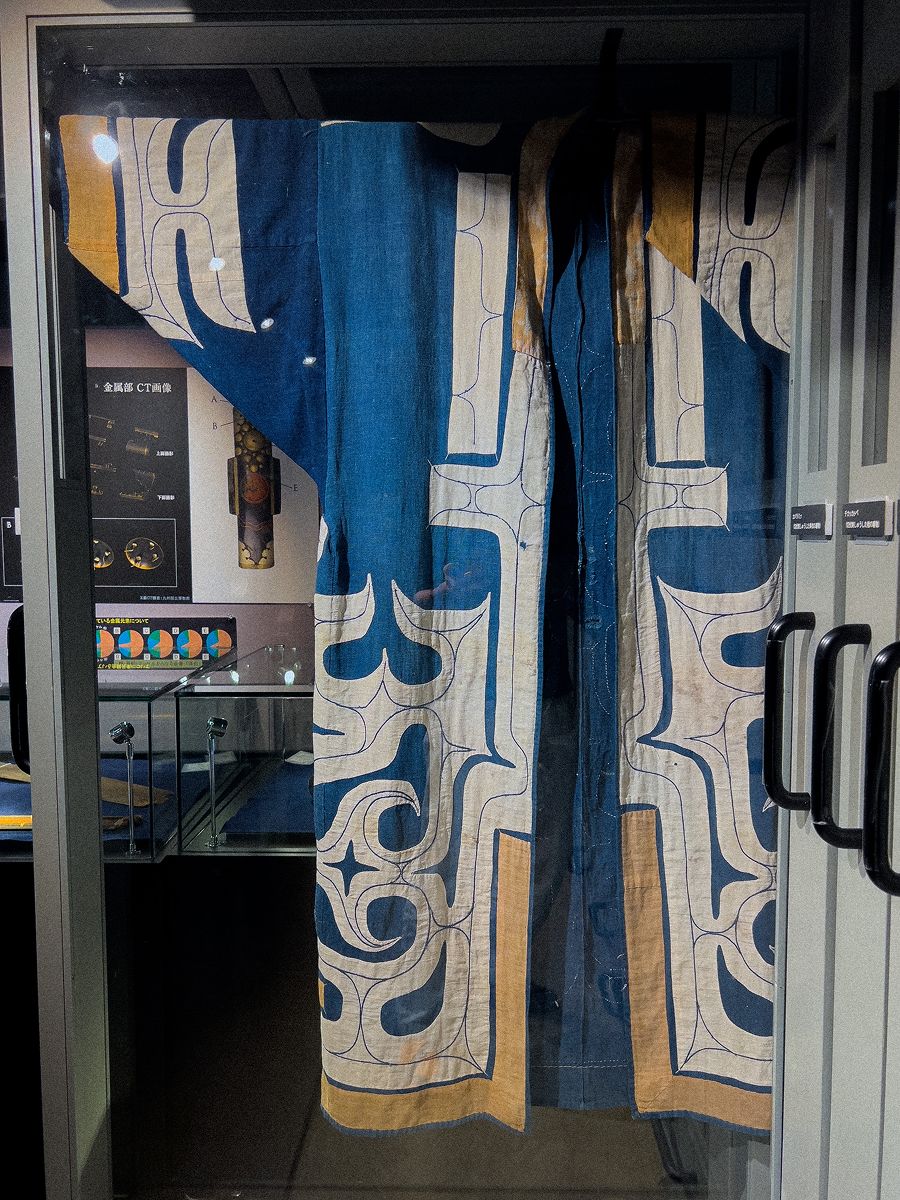
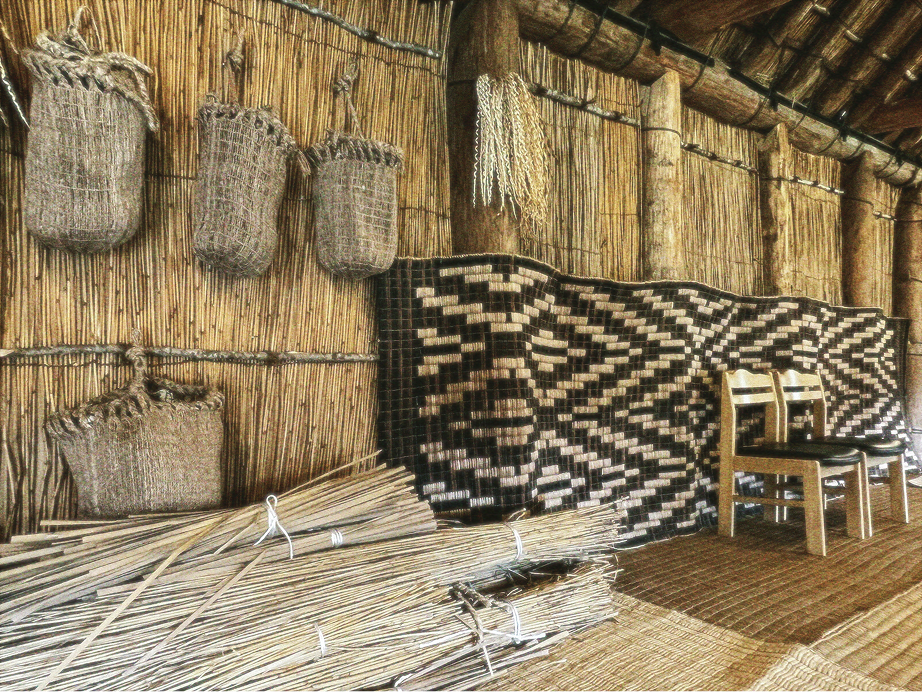
P: You once went alone to Nibutani in Hokkaido, where Ainu people still live, to do field research into their culture, craft, and cosmology.
Hori: Even as a child, I was very sensitive to the question of what was essential. Conversely, I felt a strong unease about things that were not. I have absolutely no idea where that feeling developed.
P: You have relatives who made things for a living, don't you? Did you acquire something from them? There seems to be a connection between grasping the essence of something and experiencing the physical act of making from childhood.
Hori: I probably did not think so at the time, but I imagine those experiences accumulated unconsciously. My grandfather on my father's side was a carpenter. He lived in Osaka, in a house full of the handmade character of the Showa era. When I was in elementary school, we would visit for Obon and New Year. He would call me into his large workshop and improvise a bamboo helicopter for me with a carving knife. There were also objects casually displayed around the house that looked like exposed tree trunks, which frightened me as a child. I do not know whether that family environment was the reason, but I always liked detailed handwork and origami. I enjoyed quietly expressing things through form, and was good at it. Even looking back briefly makes me nostalgic for how naturally making things was connected to everyday life.
P: It would not have been surprising if you had continued on the path of a maker.
Hori: True. In a sense, I have no complex about making things. For better or worse, those childhood experiences left me feeling satisfied with it. Perhaps they are why I am now a director rather than a designer or artist: a role that does not involve directly making things by hand, but participates in making in a broader sense.
P: There must be many different cases, but being good at making things and choosing not to pursue it professionally is unusual. You often hear about people keeping something they love separate from their work.
Hori: We all have complexes, don't we? I think the things I have a complex about make much more sense as work for me.
P: That is interesting.
Hori: Honestly, I still find being a director incredibly difficult. [Laughs.] I am not good at seeing the big picture either. Even five years after joining Patmos, I come away from every project covered in scratches. My way of doggedly gaining experience, getting hurt along the way, has not changed. I do it because I think the challenge itself has meaning, even if I am not good at it. People simply want what they do not have, don't they? Even what we want from life often has a lot to do with that. In my case, the strongest motivation for work just happens to come from an ability I wish I had.
P: I see.
Hori: Well, I do think it is odd myself. I understand the argument that you should compete where you are good and where others recognize your ability. But to me, an activity that invites comparison and criticism does not feel like making in its most primal sense.
P: When making is your livelihood, a work inevitably enters a system of exchange the moment it leaves your hands. Does that take it away from what you call primal making?
Hori: This is just my view, but making things is an activity for myself, not for anyone else. I want primal making to mean placing myself in a mentally secluded space, cut off from the noise outside, and becoming unconsciously absorbed so that I can face myself in the purest way.
P: I understand.
Hori: Although when something good comes out, I want everyone to see it, so I contradict myself. [Laughs.] In any case, I strongly feel that I do not want people to see my process or stance.
P: I had noticed you rarely publicize the work you take on privately. So that is why.
Hori: Exactly.
P: When did that way of thinking develop? I understand you studied metalwork at art university.
Hori: I think it changed during my time there. By high school, I clearly knew I liked making things, but I was happily drifting through a school that fancied itself academically competitive. In my final year, when university entrance exams came into view, my classmates suddenly shut themselves in study rooms and began working seriously. That sense of everyone falling into line frightened me. I knew from the bottom of my heart that I did not want to join that queue. I told everyone my dream for the future was not to wear a suit.
P: So your rebellious spirit was already alive and well.
Hori: It was. [Laughs.] Luckily, some friends were going to art university, and I followed that current. Once I got there, it was complete chaos: a gathering of intensely individual people at an age when their social skills were still developing. Egos collided with tremendous force every day. Yet even there, a select few quietly and stoically concentrated on making. They accounted for less than half a percent of a thousand students, but they were there. Seeing them up close, I realized I did not possess that ability, either in skill or disposition. For better or worse, I learned where I stood among people who made things. At the same time, being restless, I was involved in all sorts of other activities, including planning projects outside the university. Through meeting different people, I began to suspect that communicating might suit me better than making. I am still close to those friends who worked so single-mindedly. We still collaborate, and I respect them. But I did feel confident that I was better at talking.
P: What exactly does being good at talking mean?
Hori: That is a really difficult question. Hmm. I have never thought I was eloquent. Perhaps I like having a session with someone. I see myself as someone who does not worry too much about the situation, but perhaps I am good at sensing the atmosphere a place needs and speaking accordingly.
P: Places where you are working often seem to have a positive atmosphere.
Hori: That makes me happy. I often think about how everyone present can have a good time. Even in a large gathering, I notice if someone does not seem to be enjoying themselves. I do not like a situation where people share a space but experience completely different emotional temperatures.
P: Perhaps you have a strong interest in care: considering someone's circumstances and how they feel. Whether we are chatting or working, you often ask why someone thinks a certain way. You seem to try to understand not only an opinion but also what lies behind it.
Hori: I am fundamentally very interested in phenomena. And about that interest: I do not think interest belongs to me simply by being interest.
P: That sounds intriguing. What do you mean?
Hori: I think the perspective from which I direct my interest is what makes me who I am. Put differently, there are countless things in the world that could interest us, but we unconsciously select which ones do and which ones do not. If so, the direction and stance of that vector can be understood as part of what makes me.
P: A kind of unconscious orientation before it becomes apparent?
Hori: You could call it the phenomenon that comes before taking an interest. Perhaps that force works more strongly in me than in other people. The intense stress I feel when there is a sudden loud noise seems connected to this sensitivity. I am so sensitive to the outside world that I am like a camera with its ISO set too high, developing an entirely white image. [Laughs.] I try to pick everything up and end up picking up nothing. It is an innate bodily habit, but one I have mixed feelings about.
P: In that sense, your nonverbal vocabulary for your own bodily responses is remarkable. You are highly sensitive to feeling distorted, expansive, light, and so on.
Hori: True. Embodiment is an important element that fundamentally separates me from others. Even from an embryological perspective, there must be meaning in what gives me form: having a body this size, or being contained in a human vessel. Those outer conditions must naturally have a major influence on the mind I call myself. The form of humans, including Japanese people like me, is determined by many factors: Earth's gravity as a basic condition of survival, or Japan's climate and terrain within its latitudes of twenty to forty-six degrees north. It feels close to phenomenology or media theory. The vessel is the mind, and the mind is the vessel.
P: McLuhan proposed that the medium is the message: the form of a medium itself defines how its recipient sees the world. There is also the theory that humans readily developed a decimal system because we have ten fingers, or that having major organs and limbs in pairs encourages dualistic concepts. Beginning with the conditions of being born human on Earth, there seems to be much that arises from the physical conditions and constraints of being Rintaro Hori: a vigorous man far taller than the Japanese average.
Hori: Yes. I think that is a concept underlying everything we have discussed.
P: We have talked about your interest in how things come into being, your sensitivity to what precedes interest, and your particular embodiment. Are there other feelings or values that form your foundations?
Hori: I do not know whether everyone is like this, but I spent quite a long time never questioning the self I took for granted. I did not know how to doubt myself and never doubted my sensibility. That was overturned in my mid-twenties, almost like a reversal of destiny. After a change in my family relationships, I learned for the first time that there are things in this world that simply cannot be shared. Put bluntly, I had grown up indulged and remained innocent. I had never really looked at my own existence or actions from the other side, or objectively. If I met the person I was then, I do not think I could like him. He must have been quite detached from society.
P: Yet taking in that past self you cannot accept is part of what made you who you are now.
Hori: That fierce self-rejection—or self-criticism—led me to look at myself again. I spent more time reflecting. I still have shortcomings, but I think I am more grounded than I was. I dismantled myself and rebuilt myself, and joined Patmos during that process. Gradually I became less resistant to showing who I really am. I feel that a moment may eventually come when I can accept myself. Yes, I am beginning to have a faint sense that perhaps I could try something like self-expression again.
P: So that is where it connects. By self-expression, do you mean making something for yourself, like you did in childhood, rather than client work?
Hori: Yes. A feeling that perhaps there could be something that comes through my unguarded self. I cannot return to childhood innocence, so perhaps I will remain a director, or perhaps not.
P: It is still only a sign you are sensing.
Hori: Exactly. Since art university, I have felt there may be ways to participate in making beyond making things myself. In that sense, I want to be someone who accompanies makers and designers, contributing to teamwork that enables a purer form of making. I do not think that attitude will change. Although I might suddenly announce that I want to be an artist. [Laughs.] Who knows?
Self-Consciousness Takes Shape through Work and Contribution
—A Conversation Grounded in Goodness
Hori: I think a German thinker said something along the lines of working being life itself, an act through which we connect with society. That fits my thinking exactly. I see a connection with the idea that people suddenly age after retirement. Work is probably one platform for self-expression. How much someone shines in it may affect whether they approach work negatively or positively, but I think it remains a source of meaning in life.
P: In The Phenomenology of Spirit, Hegel describes the bondsman as coming to himself through labor, and labor as desire held in check, disappearance deferred, or the act of giving form. This leads to the connection between labor, the acquisition of self-consciousness, and true independence, which carries into Marx's view of labor. Going further back to ancient Greece, Aristotle understood humans as political animals—beings of the polis, or community—who fulfill their nature only by participating in it. Rather than a philosophy of labor itself, this could be called a philosophical starting point for life as participation in society. I hear your thinking as combining those ideas with a modern sense of individualism.
Hori: Yes. In any case, I think work is for oneself, and should also be for society. Like a Venn diagram, the greater the overlap between the individual and society, the more brightly a person's soul seems to shine.
-
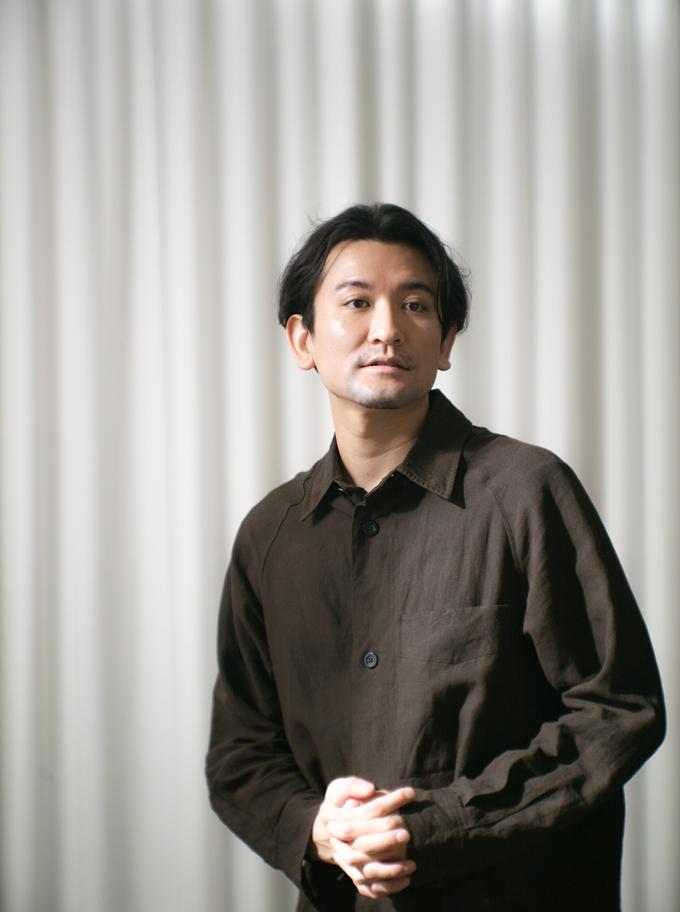
Brand Director, Gestalter / Born in Tokyo, Japan, in 1990. With a deep interest in how things and products come into being, as well as the intentions of the people behind them, he specializes in uncovering the essential values and atmosphere inherent in a project through dialogue and collaborative sessions. Drawing on an aesthetic sensibility cultivated during his university years and extensive experience in project management, he works as a close partner throughout the process, from translating brand strategy into tangible form to concept development and experience design. Moving fluidly between those who create and those who communicate, he values creating an environment of resonance where everyone involved can engage openly and genuinely, going beyond surface-level expression. In his fieldwork, he enjoys observing the landscapes, traditional crafts, and everyday life of different regions, and is particularly drawn to the primitive aesthetic sensibilities that reside beneath conscious awareness. His personal passion is basketball.