Have you heard the term “Copernican revolution”? It refers to the revolution in thought proposed by the sixteenth-century astronomer Nicolaus Copernicus, which overturned the belief in an Earth-centered universe at its foundations. For people at the time, the center of the world was unquestionably the Earth beneath their feet. They believed that the stars scattered across the night sky and the blazing Sun all moved around them. From that perspective, the Earth stood still, while the universe revolved around it. Copernicus, however, turned this “common sense” on its head. It was the Earth, he declared, that actually revolved around the Sun. This single reversal changed humanity’s understanding of the cosmos decisively. We were no longer at the center of the world. Human beings were merely a point within the universe, not its absolute measure. This discovery was not simply a matter of astronomical theory. It shook the very foundations of human perception. The world we “see” is not necessarily “the world itself.” This realization heralded the beginning of modern thought.
In the eighteenth century, the philosopher Immanuel Kant turned this cosmic revolution inward, toward the human mind. In the Critique of Pure Reason, he proposed another reversal: rather than the world simply being given to us, our cognition shapes the world. This was a Copernican revolution in thought. Kant reasoned that we cannot see the world “as it is.” We may believe we are seeing it directly, but in fact we see through structures—frameworks that make seeing possible. These structures are the twin lenses of sensibility and reason, through which we “constitute” the world. The world is not simply “there”; it comes into being through our act of “seeing” it. We are, in other words, both observers of the world and its co-creators. It was here that Kant introduced the concept of the “thing in itself” (Ding an sich): the world itself, existing beyond human cognition. We cannot see it directly, because every experience has already passed through the filter of the self. He described it as a truth beyond our reach, while also arguing that the effort to seek it is itself an expression of human reason.
We might think of the “thing in itself” here, for example, in terms of a “measure.” Each of us has a measure by which we gauge the world. Yet that measure is never objective: it is shaped by experience, culture, sensibility, and values. We can understand the world only through this measure, and it is precisely between people with different measures that the possibilities of dialogue and creation arise. Human limitations are thus also a source of human creativity. The question of how we see the world is a fundamental theme running not only through philosophy, but also through art and design. It is a shift from “discovering” the world to “constructing” it—a revolution in perception, and at the same time, the birth of beauty.
Beauty is a new order of sensibility through which to “see” the world rightly, and a way of making invisible truths visible. Yet here we must pause once more. For we are once again living within the same structure of thought as those who believed that the Earth was the center of the universe. Much of contemporary design inhabits a world that revolves around “creating value,” “communicating effectively,” and “being functional.” Of course, these aims are not wrong in themselves. But something essential is missing when this logic stands alone. We have tried to judge the rightness of design by the measures of efficiency and results. Without noticing, we have come to believe that this “measure” is the only truth, and have forgotten to question it. We have come to believe that this alone is good design. Yet this has the same structure as the Earth-centered cosmology of the past.
We place our own measures—the market, the economy, our objectives—at an absolute center, viewing, evaluating, and judging everything from that position. But the world does not, by its nature, move in this way. We are under the illusion that it revolves around reason. Many people today remain within a framework that takes reason to be the center of the world. Yet the true center lies elsewhere. The world revolves not around reason, but around sensibility. Sensibility is our first way of knowing the world: a connection deeper than reason and prior to language. It has the power to release us from constraints and turn us away from “What should we do?” toward “How do we wish to be?” Where reason gives order, sensibility gives freedom. It is an act of giving meaning to the world and, at the same time, of opening ourselves to it. That is why we must ask ourselves once more: from what center are we looking at the world?
If we believe that the world is illuminated only by the light of reason, what emerges is a universe of order and efficiency. If, instead, we place the fluctuations of sensibility at its center, what emerges is a universe of change and creation. Might what we truly need as human beings be to free ourselves from constraints through sensibility, and to attain a lightness of freedom? — Art as a place where sensibility overflows and reason is lost. By contrast, the world of art is often a realm in which sensibility governs everything. There, the order of reason and the frameworks of logic are lightly transcended, and the emotions, impulses, and imagination that well up from within us appear directly as forms in the world. It is a space of freedom, released from every constraint, and a place where we recover our most fundamental power: the ability to feel. Yet when sensibility is set free without limit, another danger arises: sensibility adrift, having lost the supporting structure of reason.
When art withdraws too far into the self, severing its capacity to be shared with others and its relationship with society, it ceases to be an act of “feeling the world” and becomes an act of “consuming one’s own sensations.” Sensibility is indeed a key that opens the world. But reason is the structure that holds that world together. Lose either one, and the world loses its balance. When art inclines toward a realm of pure sensibility, it may shine beautifully for an instant, but its light has no structure through which to endure. In time, it fades and disperses without leaving a form behind. Art, in its essential sense, is not an outpouring of sensibility. It arises at the boundary where sensibility and reason contend with one another. Its essence lies not in simply expressing what we feel, but in attempting to reconnect what we have felt to the world as meaning.
Art, then, is an act of casting the light of reason into the chaos of sensibility, an attempt through thought to discover order within disorder. Sensibility without reason is mere chaos; reason without sensibility is a mere machine. To move back and forth between the two, weaving new “forms of meaning”: this is the creative task entrusted to the artist. Art is therefore free, yet it also contains the most demanding constraints. The freedom to feel, and the responsibility to construct. Might it be only when these two are held in balance that art first emerges as “beauty”?
-
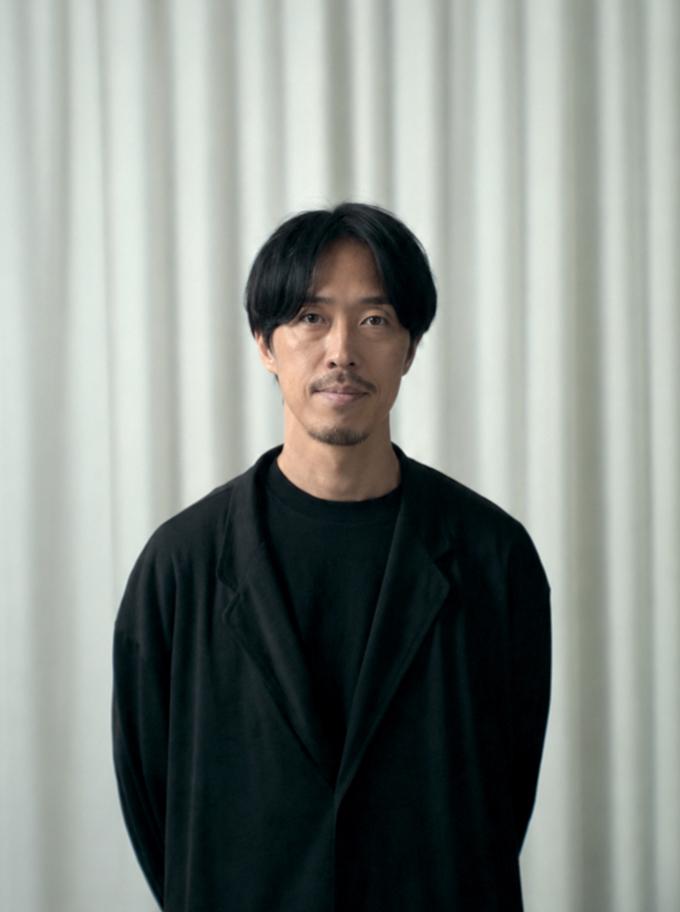
Founder of Patmos and Gestalter. He proposes Gestalting™, a philosophy grounded in two propositions: “Design is not the imposition of form upon an object, but the disclosure of the necessity immanent in the whole,” and “The whole is more than the sum of its parts.” Integrating management and design, his practice extends from philosophy and strategy to brand, organization, product, architecture, space, film, graphic design, and the web—approaching them not as separate disciplines, but as parts of a single meaningful whole. He regards truth, goodness, and beauty not as fixed ideals, but as a dynamic philosophy unfolding through time. By continually questioning his own perception, he attends to the relations that arise between people, organizations, society, culture, nature, and time. Through this inquiry and practice, he seeks "Zengen" the manifestation of the whole in its fullest form—opening toward a future in which the value of each part resonates beyond their sum, giving rise to stories of beauty, meaning, and wonder.